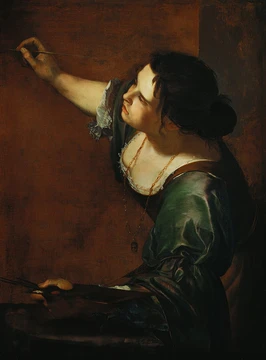
Zeuxis (painter)
Late 5th-century BCE Greek painter famed for realistic illusion.

Zeuxis was a late 5th-century to early 4th-century BCE Greek painter from Heraclea, famed for his ability to create images that appeared highly realistic. None of his works survive, but anecdotes about his art and life have been referenced often in the history and literature of art and in art theory. He was a painter of the Ionian School, which flourished during the 6th and 5th centuries BCE, though Zeuxis himself was active in the late 5th to early 4th century BCE.
- born
- Heraclea (probably Heraclea Lucania, in present-day Basilicata, Italy); exact birth year unknown (modern estimate places it around 464 BCE)
Lore & Background
Zeuxis was born in Heraclea, probably Heraclea Lucania in present-day Basilicata, Italy; his exact birth year is not known from ancient sources, though a modern estimate places it around 464 BCE. He may have studied with Demophilus of Himera, Neseus of Thasos, or the Greek painter Apollodorus. He was active across the ancient Greek world from Magna Graecia to Ephesus, Macedonia, Samos, and Athens, where his greatest number of works were made. His works included 'Eros' (sometimes associated with a temple of Aphrodite, though the location is not clearly documented), 'Penelope', 'Helen', 'Zeus Enthroned', 'The Infant Hercules Strangling the Serpents', an assembly of gods, 'Eros crowned with roses', 'Alcmene', 'Menelaus', an athlete, 'Pan', 'Marsyas chained', and an old woman. King Archelaus I of Macedon employed him to paint a picture of Pan, though the specific location (such as the palace of Pella) is not confirmed in surviving sources. Many of his works were taken to Rome and Byzantium, but some were still extant in the time of Pausanias (2nd century CE), who mentions seeing them.
Reader's Guide
Zeuxis is significant primarily through anecdotes preserved by Pliny the Elder, Xenophon, and Aristotle, which shaped Western art theory for centuries. His most famous story involves a contest with Parrhasius: Zeuxis painted grapes so realistic that birds pecked at them, but Parrhasius painted a curtain that Zeuxis himself tried to pull aside, prompting Zeuxis to admit defeat. This tale became a touchstone for discussions of spatial illusion in 18th- and 19th-century art theory. Zeuxis also introduced genre subjects like still life, preferred small-scale panels to murals, and created volumetric illusion through light and shadow rather than flat color. According to Cicero, he selected the finest features of five models from Croton to paint a composite ideal of Helen of Troy, influencing later concepts of ideal form. His death, as recorded by Festus, is said to have occurred when he died laughing at a painting of an old woman, a story later alluded to by artists such as Rembrandt and Aert de Gelder in self-portraits.
Did You Know?
- None of Zeuxis's paintings survive; knowledge of his work comes from literary sources such as Pliny the Elder, Xenophon, and Aristotle.
- In a famous contest, Zeuxis painted grapes so realistic that birds pecked at them, but Parrhasius won by painting a curtain that Zeuxis tried to pull aside.
- Zeuxis is said to have died laughing at a painting of an old woman he had just completed.
- He contributed to the composite method of composition, selecting features from five models to create an ideal image of Helen of Troy.
Life and Geographic Range
Zeuxis was born in 464 BCE in Heraclea, most likely the settlement known as Heraclea Lucania, situated in what is now the Basilicata region of southern Italy. His early training remains uncertain; ancient sources suggest he may have apprenticed under Demophilus of Himera in Sicily, Neseus of Thasos on a northern Aegean island, or the Greek painter Appollodorus. Whatever his formative influences, Zeuxis went on to work across the entire Greek-speaking world, producing paintings in Magna Graecia, Ephesus, Macedonia, Samos, and above all Athens, where the bulk of his output was concentrated. His earliest recorded pieces include an Eros for the temple of Aphrodite and a Penelope. Later commissions brought him broader recognition: a Helen, a Zeus Enthroned, and a depiction of the infant Hercules strangling serpents. King Archelaus I of Macedon specifically hired him to paint a figure of Pan for the palace at his new capital, Pella. Zeuxis belonged to the Ionian School of painting, a tradition that flourished in the fourth century BCE. Tragically, nearly all of his canvases ended up in Rome and Byzantium and were lost by the era of the geographer Pausanias, leaving future generations to know him only through written accounts.
Technique and Artistic Innovation
What set Zeuxis apart from his peers was a cluster of innovations that reshaped how Greek painters approached their medium. Rather than filling outlined shapes with flat, uniform color, he manipulated light and shadow to produce a convincing sense of volume, giving his figures a three-dimensional presence on the panel. He favored small, independent panels over large mural compositions, and he was among the first to bring everyday genre subjects—such as still-life arrangements—into the realm of serious painting. His approach to composition was composite: rather than relying on a single model, he assembled the most striking features from multiple sources to build an idealized whole. The art historian Kenneth Clark credits Zeuxis with helping to establish the very concept of an ideal nude form in Western art. A story preserved by Cicero illustrates this method: when tasked with painting Helen of Troy, Zeuxis reportedly found no single woman in Croton beautiful enough to serve as his sole model, so he selected the finest attributes from five different women and synthesized them into one composite image. His work was also noted for its realism, novel subject matter, and intimate scale, qualities that distinguished him within the Ionian School.
The Contest with Parrhasius
The most celebrated anecdote in Zeuxis's story pits him against his fellow Ionian School painter Parrhasius, originally from Ephesus and later based in Athens. According to Pliny the Elder's Natural History, the two staged a public contest to determine who could create the more convincing illusion of nature. Zeuxis unveiled a painting of grapes rendered with such lifelike detail that birds swooped down to peck at the painted fruit. Confident in his triumph, he turned to his rival's work, hidden behind a curtain. When Zeuxis reached out to draw it aside, he discovered the curtain itself was a painted illusion—Parrhasius had depicted the drapery so convincingly that no one recognized it as a painting. Parrhasius won, and Zeuxis conceded that he had fooled the birds, but Parrhasius had fooled him. A variant has Zeuxis painting a boy holding grapes; when birds again tried to peck the fruit, he grew irritated, reasoning he must have rendered the boy poorly, since a realistic child would have scared the birds off. The episode became a touchstone in eighteenth- and nineteenth-century art theory, invoked whenever scholars discussed spatial illusion on a flat surface.
Death and Enduring Legacy
Zeuxis's death, as recorded by the Roman grammarian Festus, carries a note of dark humor: he reportedly died laughing at a painting of an old woman he had just completed. The precise reason for his laughter is left unexplained, but the image of a master painter overcome by mirth over his own work has proven irresistible to later generations. Aert de Gelder followed with his own Self-Portrait as Zeuxis in 1685, and Jean-Étienne Liotard may have echoed the same motif in his Self-Portrait Laughing circa 1770. Beyond these direct pictorial references, Zeuxis's name became a shorthand for artistic excellence and the pursuit of verisimilitude. Though not a single one of his paintings has survived, his reputation was sustained by the writings of Pliny the Elder, Xenophon, and Aristotle, and by the countless anecdotes that circulated through art history and art theory for over two millennia. His name endures as a benchmark for artistic ambition.
Frequently Asked Questions
Who is Zeuxis (painter)?
Zeuxis was an ancient Greek painter active roughly between the late 400s and early 300s BCE, originating from Heraclea in southern Italy. He belongs to the broader Ionian School tradition of Greek visual art.
What made Zeuxis (painter) famous?
He became legendary for his extraordinary skill at producing images so lifelike that viewers reportedly mistook them for the real thing. This reputation for optical deception and naturalism is the core of his surviving legacy.
Where was Zeuxis (painter) born?
He was born in Heraclea, most likely the colony of Heraclea Lucania in what is now the Basilicata region of southern Italy. His exact birth year is unknown, though modern scholars place it around 464 BCE.
Do any paintings by Zeuxis (painter) still exist?
No original works by Zeuxis have survived to the present day. What we know of his art comes entirely from written anecdotes and references in later art-historical and literary sources.
Why is Zeuxis (painter) important to art history?
Even without surviving canvases, his stories became foundational examples in discussions of mimesis, illusion, and the limits of painting. Writers and theorists from antiquity onward kept citing his feats to illustrate what art could and could not achieve.
More in Old Masters 1-22
Spotted an error? Know more?
This is a living reference — every entry is fact-audited, and reader corrections feed straight into our audit queue. Suggest an edit · See this site's audit record